Commercial Matcha Latte Formulation: Solving Clumping, Browning, and Cost (COGS) for Cafe Chains
A technical B2B guide for cafe chains and beverage brands to formulate commercial matcha lattes, solving operational pain points like powder clumping, rapid oxidation/browning, and single-cup cost (COGS) optimization.
Table of Contents
Need Samples for R&D or Formulation?
We provide free samples of Ceremonial, Premium, and Culinary grade matcha for commercial testing.
For global coffee and tea chains, the matcha latte is no longer a seasonal novelty—it is a high-margin, year-round anchor product. Driven by Gen Z and Millennial demands for clean energy and functional wellness, matcha lattes command a premium retail price, often 15% to 20% higher than standard espresso-based drinks. However, scaling a matcha latte program across 50, 500, or 5,000 locations introduces severe operational and financial bottlenecks. Baristas cannot spend two minutes hand-whisking powder with a bamboo whisk during peak morning rushes, and pre-mixed liquid bases quickly turn from a vibrant green to an unappealing brown. This technical guide provides beverage developers, R&D directors, and procurement managers with industrial solutions to solve powder clumping, rapid browning, and single-cup cost (COGS) optimization. For a broader overview of how matcha is applied in commercial drink menus, see our Beverages & Cafes Solutions.
1. The Operational Bottleneck: Solving Matcha Clumping in Fast-Paced Cafes
Matcha is a micro-fine powder (typically 5 to 10 microns) that is highly hydrophobic. When it contacts liquids, the outer layer of particles hydrates instantly, forming a water-resistant barrier that traps dry powder inside. This creates stubborn clumps that ruin the drink's texture and leave a gritty residue at the bottom of the cup. In a high-volume cafe environment where speed of service (SOP) is measured in seconds, traditional hand-whisking is impossible. Cafe chains must adopt one of three commercial preparation methods:
Method A: The Pre-made Matcha Concentrate (Best for High-Volume Speed)
Instead of mixing powder per order, central kitchens or store managers prepare a concentrated liquid base at the start of the day. Baristas simply pump the concentrate into a cup, add milk, and serve.
- The SOP: Combine 100g of Premium Matcha powder with 1 Liter of warm water (70°C to 80°C) in a commercial high-shear blender. Blend on high for 60 seconds to ensure complete dispersion.
- The Ratio: A standard 10ml pump of this concentrate delivers approximately 1g of pure matcha. For a 12oz latte, baristas use 3 pumps (30ml concentrate containing 3g matcha) and top with steamed or iced milk.
Method B: The Pumpable Matcha Syrup (Best for Sweetened Lattes)
For chains that serve pre-sweetened lattes, formulating a stable matcha syrup is the most efficient method. Sugar acts as a natural dispersing agent, preventing the matcha particles from clumping together.
- The SOP: Dissolve 500g of cane sugar in 500ml of hot water to create a simple syrup. Cool to 60°C, then add 100g of micro-milled matcha. Blend with a high-shear immersion blender. Add 0.1% food-grade Xanthan Gum or Acacia Gum to act as a stabilizer, preventing the matcha from settling over a 24-hour period.
Method C: Direct Steam-Wand Emulsification (Best for Hot Lattes)
If preparing per order, baristas can leverage the steam wand of an espresso machine to disperse the powder.
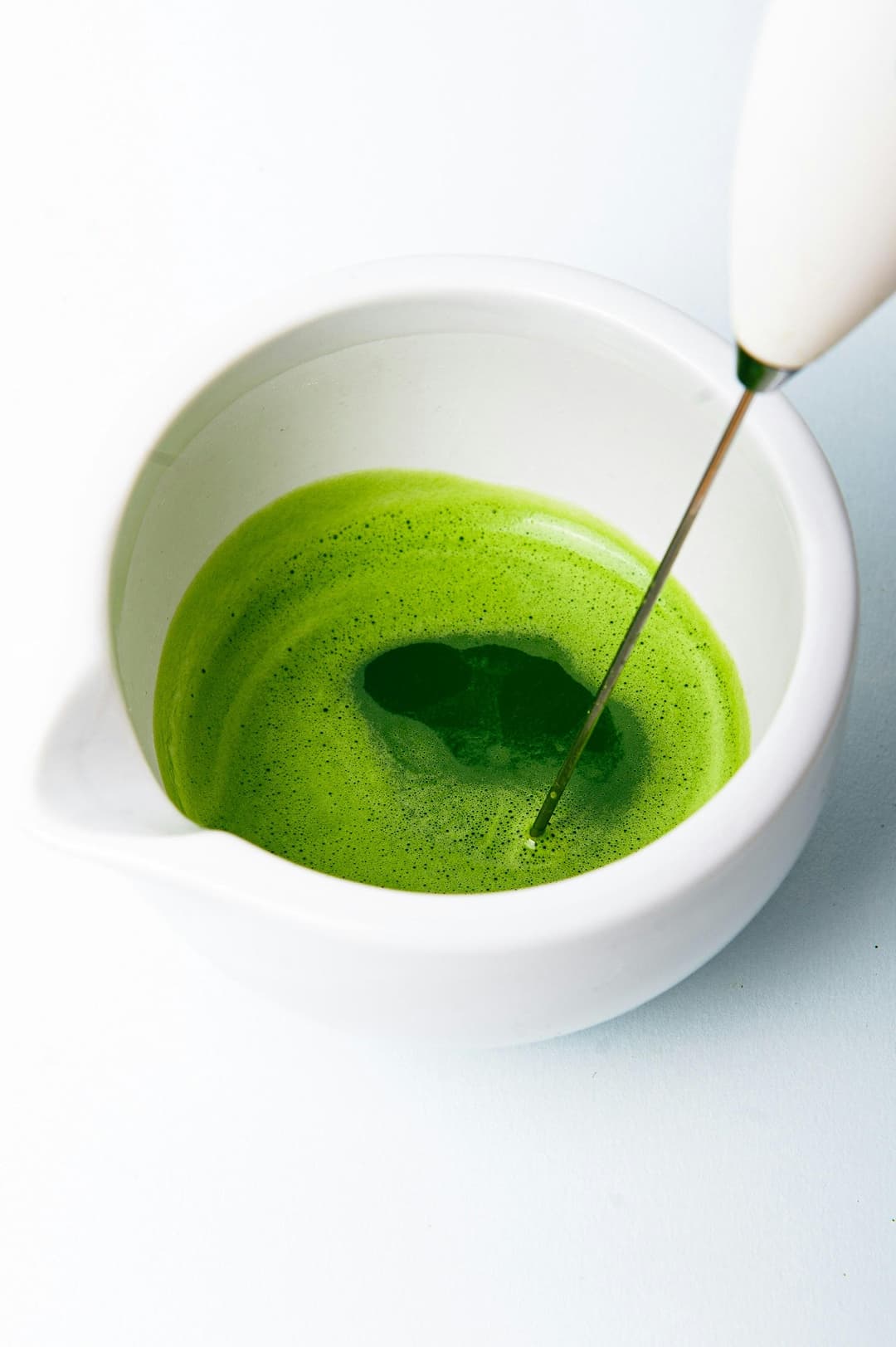
- The SOP: Add 3g of matcha powder and 30ml of warm water directly into a milk pitcher. Insert the steam wand just below the surface and purge steam for 3 to 5 seconds. The high pressure and heat instantly emulsify the powder without clumping. Add milk and steam together to the final serving temperature (60°C to 65°C).
2. The Chemistry of Color: Preventing Browning and Oxidation on the Bar
The vibrant green color of matcha is due to chlorophyll, an unstable pigment that degrades rapidly when exposed to heat, light, and oxygen. When a cafe pre-mixes a matcha concentrate or syrup, the liquid will turn from a brilliant jade green to a dull, olive-brown within 2 to 4 hours. This color change is caused by pheophytinization—a chemical reaction where hydrogen ions displace the central magnesium ion in the chlorophyll molecule. To keep pre-mixed bases looking fresh for a full 12-hour shift, R&D teams must apply two chemical stabilizers:
A. pH Stabilization (The Alkaline Buffer)
Chlorophyll degradation is highly accelerated in acidic environments. While pure water is neutral (pH 7.0), dissolved carbon dioxide and organic compounds can drop the pH of water to 5.5–6.0. Adding a tiny, controlled amount of Sodium Bicarbonate (Baking Soda) or Dipotassium Phosphate acts as a buffer, raising the pH of the concentrate to a stable 6.8 to 7.2. This alkaline buffer physically protects the magnesium ion in the chlorophyll ring, halting the browning process.
B. Oxygen Scavenging (Antioxidant Synergy)
To prevent oxidation, add 0.03% to 0.05% of Sodium Ascorbate (Vitamin C) to the water before blending the matcha. Sodium ascorbate reacts preferentially with any dissolved oxygen in the water, preventing the oxygen from reacting with the chlorophyll and catechins in the matcha.
Storage Tip: Always store the pre-made concentrate in opaque, airtight squeeze bottles and keep them in the under-counter refrigerator (4°C) when not in use. Cold temperatures significantly slow down the rate of chemical reactions.
3. Sourcing and COGS: Optimizing Cost Without Sacrificing Quality
For procurement directors, the financial viability of a matcha program depends on the Cost of Goods Sold (COGS). A common mistake is sourcing expensive Ceremonial Grade Matcha for lattes. Ceremonial matcha is ground from delicate, first-flush spring leaves. While it tastes excellent when whisked straight with water, its subtle umami notes and sweet aroma are completely overwhelmed by the strong fats and sugars in dairy and plant milks. Conversely, cheap Culinary Grade Matcha (often harvested in late summer) is too bitter and has a yellowish-brown hue, requiring excessive sugar to mask the taste.
The solution is sourcing a dedicated Premium Grade Matcha (often referred to as Premium Latte Grade). This grade is harvested in late spring, shaded for 25 days, and jet-milled to 5-8 microns. It provides the vibrant green color of ceremonial grade, but retains a robust, slightly astringent tea profile that cuts through milk cleanly.
Let's look at the COGS breakdown for a standard 12oz (350ml) matcha latte using Orisen Premium Latte Grade Matcha:
| Ingredient / Component | Standard Dosage | Cost per Unit | Cost per Serving (USD) |
|---|---|---|---|
| Orisen Premium Matcha | 3.5 grams | $28.00 / kg (Wholesale) | $0.098 |
| Oat Milk (or Whole Milk) | 250 ml | $1.80 / Liter | $0.450 |
| Sweetener (Simple Syrup) | 15 ml | $0.002 / ml | $0.030 |
| Paper Cup & Lid | 1 set | $0.150 / set | $0.150 |
| Total Raw Ingredient COGS | $0.728 | ||
By sourcing directly from a vertically integrated Chinese manufacturer like Orisen Tea, chains can bypass the markups of Japanese trading houses, reducing their raw matcha cost by 30% to 50%. A raw matcha cost of under $0.10 per serving allows cafe chains to maintain a food cost percentage of under 15% on a drink that typically retails for $4.50 to $5.50, yielding exceptional profit margins.
4. Summary: The Commercial Matcha Latte SOP Checklist
- Source the Right Grade: Select a Premium Grade (D90 < 10μm, shaded > 25 days) to balance color, taste, and cost.
- Pre-disperse to Prevent Clumps: Prepare a 10% concentration matcha liquid base using a high-shear blender at the start of the day.
- Stabilize the Color: Add 0.04% Sodium Ascorbate and 0.02% Sodium Bicarbonate to the water to prevent browning.
- Store Cold: Keep the concentrate in opaque squeeze bottles in the refrigerator (4°C) to extend shelf life to 12 hours.
- Optimize Milk Pairing: Recommend oat milk as the default option to maximize the natural umami and sweetness of the matcha.
Partner with Orisen Tea for Your Beverage Program
Hunan Orisen Biotech Co., Ltd. (Orisen Tea) is a vertically integrated manufacturer and exporter of bulk matcha powder. We manage our own high-altitude, shade-grown tea gardens and operate state-of-the-art processing facilities certified under FDA, ISO22000, HACCP, Halal, and USDA/EU Organic standards. Our application lab works directly with R&D teams of major cafe chains to develop custom matcha formulations, optimize SOPs, and conduct stability testing. Contact our B2B sales team today to request a free 100g sample of our Premium Grade Matcha and discuss your beverage program requirements.
FAQ: Commercial Matcha Latte Formulation
Q1: Can we use pre-sweetened matcha powder for our cafe chain?
Yes. Orisen Tea offers custom OEM blending services. We can manufacture a pre-sweetened matcha latte mix (combining matcha with cane sugar, fruit sugar, or zero-calorie sweeteners like monk fruit) to simplify store operations. However, for maximum flexibility in adjusting sweetness levels per customer request, we recommend sourcing pure Premium Grade Matcha powder and adding syrup at the bar.
Q2: Why does our iced matcha latte separate after 10 minutes?
Matcha is a suspended powder, not a soluble extract. In cold drinks without thick milk bases, the particles will naturally settle. To slow this down, ensure you are using a micro-milled matcha (5-8 microns). If using thin plant milks like almond or coconut milk, adding a tiny amount of food-grade stabilizer (like gellan gum or acacia gum) to your pre-made syrup or concentrate will keep the particles suspended.
Q3: How do we verify that the matcha is free from heavy metals and pesticides?
Every shipment of Orisen Matcha is accompanied by a batch-specific Certificate of Analysis (COA) and third-party lab reports (SGS or Eurofins) verifying compliance with the Maximum Residue Limits (MRLs) and heavy metal standards of your importing country (e.g., US FDA or EU EFSA). (Read more in our Matcha Quality Grading & Evaluation Standards.)
Interested in Sourcing Premium Matcha Powder?
Hunan Orisen Biotech Co., Ltd. is a certified factory source. Contact us for bulk wholesale pricing, custom formulation, or OEM private label packaging.
Related Articles
Formulating RTD Matcha Beverages: Industrial Solutions for Sedimentation and Oxidation
The Chemistry of Matcha in Baking: How to Prevent Chlorophyll Degradation (Browning)