.svg)

Introduction
When people think of matcha today, Japan is often the first country that comes to mind. Matcha lattes, traditional Japanese tea ceremonies, and premium Japanese matcha brands have helped establish a strong global association between matcha and Japanese culture.
However, many consumers are surprised to learn that the origins of matcha can actually be traced back to China more than 1,000 years ago.
The story of matcha is not simply a Japanese story—it is a shared cultural journey that began in ancient China, evolved in Japan, and is now experiencing a remarkable revival in modern China.
As global demand for matcha continues to grow, understanding its historical roots provides valuable insight into the future of the industry.
The Birth of Matcha in Ancient China
The earliest form of matcha originated during China’s Tang Dynasty (618–907 AD), when tea leaves were steamed, compressed into cakes, and ground into powder before consumption.
This tea preparation method became highly refined during the Song Dynasty (960–1279 AD), a period widely recognized as the golden age of Chinese tea culture.
During the Song Dynasty, a practice known as “Dian Cha” (点茶) became popular among scholars, officials, and the imperial court. Tea powder was whisked with hot water using bamboo tools to create a frothy beverage remarkably similar to modern matcha preparation.
Tea competitions, artistic tea presentations, and sophisticated tea ceremonies flourished throughout the Song Dynasty, making powdered tea one of the most prestigious beverages of the era.
Many historians consider Song Dynasty Dian Cha to be the direct ancestor of modern matcha.
How Matcha Reached Japan
In the late 12th century, Japanese Buddhist monks traveled to China to study religion, philosophy, and culture.
One of the most influential figures was the monk Eisai, who visited China and brought tea seeds and powdered tea preparation methods back to Japan.
Inspired by Chinese tea traditions, Japanese monks began cultivating tea and practicing powdered tea ceremonies.
Over time, Japan preserved and further developed these traditions while many aspects of powdered tea culture gradually declined in China during the Ming Dynasty (1368–1644 AD), when loose-leaf tea became the dominant form of tea consumption.
As a result, Japan became the primary guardian and innovator of matcha culture for several centuries.
Today’s Japanese tea ceremony, known as Chanoyu, remains deeply connected to the Chinese Dian Cha practices that inspired its development.
Chinese Matcha and Japanese Matcha: A Shared Heritage
Rather than viewing Chinese matcha and Japanese matcha as competitors, it is more accurate to see them as part of a shared historical tradition.
Both Chinese and Japanese matcha are produced from carefully cultivated green tea leaves that are processed into fine powder.
Both emphasize vibrant green color, delicate flavor, and traditional craftsmanship.
However, modern production techniques, regional growing conditions, and market preferences have created some differences between the two.
Japanese matcha is often associated with traditional tea ceremony applications and premium ceremonial grades.
Chinese matcha production has increasingly focused on large-scale manufacturing, food-grade applications, beverage ingredients, and global industrial supply.
Today, many international food manufacturers, beverage brands, and nutritional supplement companies source high-quality matcha from China due to its reliable supply capacity, advanced processing technology, and competitive pricing.
The Revival of Chinese Matcha
In recent years, China has witnessed a significant revival of matcha production.
Driven by growing global demand, Chinese tea producers have invested heavily in:
- Modern matcha processing facilities
- Organic tea cultivation
- Quality control systems
- International food safety standards
- Sustainable farming practices
Regions such as Zhejiang, Guizhou, Jiangsu, and Hunan have become important centers for modern matcha production.
Chinese manufacturers now produce a wide range of matcha products, including:
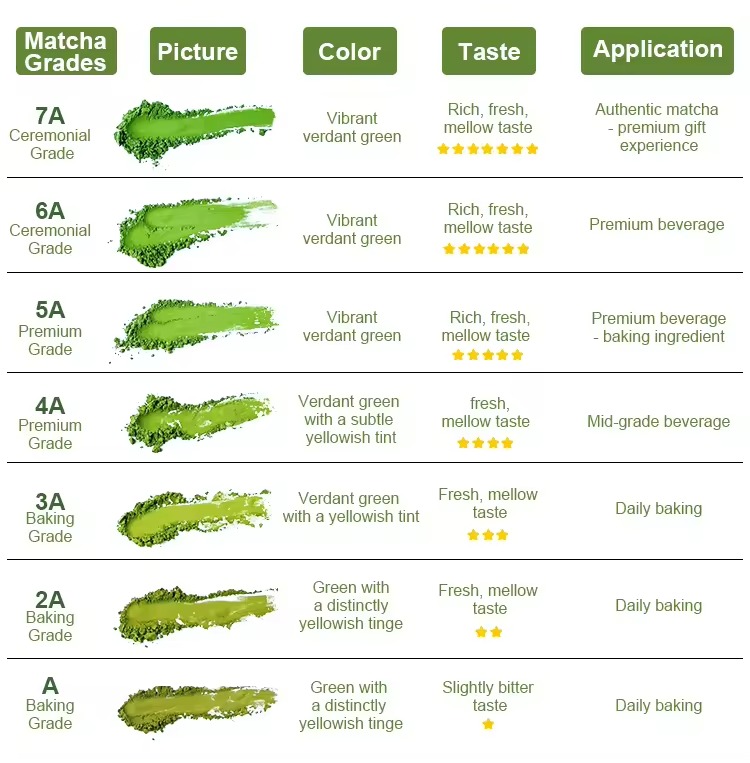
- Ceremonial Grade Matcha
- Premium Grade Matcha
- Culinary Grade Matcha
- Organic Matcha Powder
- Matcha for Bubble Tea
- Matcha for Bakery Applications
- Functional Beverage Ingredients
This revival represents more than industrial growth—it is also a cultural rediscovery of a tea tradition that originated in China centuries ago.
China’s Role in the Global Matcha Industry
Today, China plays an increasingly important role in the global matcha supply chain.
As international demand continues to expand, food and beverage companies require stable supply, scalable production, and competitive sourcing solutions.
Chinese Matcha Manufacturers are well positioned to meet these needs through:
- Large-scale production capacity
- Advanced manufacturing technology
- Comprehensive OEM services
- Private label solutions
- Export experience in global markets
Many global brands now work closely with Chinese Matcha Suppliers to develop innovative products ranging from matcha beverages and bakery products to nutritional supplements and functional foods.
Looking Ahead
The global popularity of matcha continues to grow, but its story is much older than modern consumer trends.
From the tea competitions of the Song Dynasty to today’s international food and beverage industry, matcha has traveled across centuries and cultures.
Japan has played an essential role in preserving and refining matcha traditions, while China is now experiencing a remarkable revival of its own historical matcha heritage.
As consumers become more interested in authenticity, sustainability, and cultural history, the connection between ancient Chinese tea culture and modern matcha production will become an increasingly important part of the industry’s future.
The story of matcha is ultimately a story of cultural exchange, innovation, and revival—one that continues to unfold in China and around the world.